
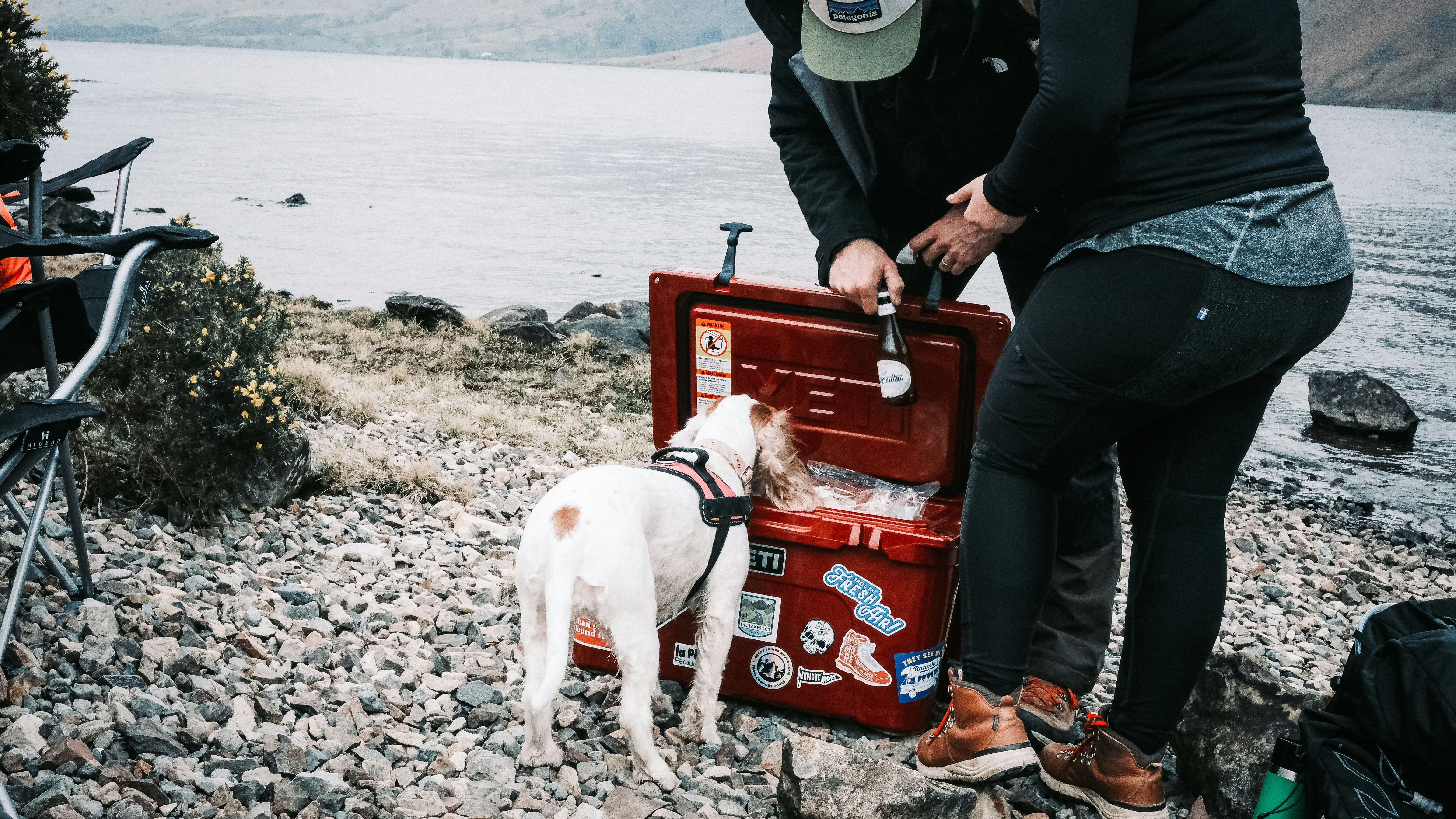
One of the best parts of car camping and road trips is that you don’t have to leave your best friend behind.
For many travelers, dogs aren’t just pets. They’re hiking buddies, campsite companions, road trip co-pilots, and sometimes the only consistent company during long stretches of travel. Having a travel dog can make life on the road feel less lonely and a lot more rewarding.
That said, traveling with a dog also comes with challenges.
A dog doesn’t understand your carefully planned itinerary. They don’t care that you’re trying to drive another three hours before sunset. They certainly don’t understand why you’ve decided that today is the day to visit three scenic overlooks and a roadside attraction.
Dogs have their own needs, routines, and limitations, and learning to balance those needs with your travel goals is one of the most important parts of successful road travel with a pet.
The good news is that most dogs adapt remarkably well to life on the road. In many cases, they become better travelers than their humans. With a little preparation and realistic expectations, traveling with your dog can become one of the most enjoyable aspects of your adventures.
Not Every Dog Travels the Same
One of the biggest mistakes new travelers make is assuming all dogs will react the same way to road travel.
Some dogs jump into the vehicle and immediately settle in like they’ve been doing it their entire lives.
Others need time to adjust.
Some dogs love meeting new people.
Others prefer quiet campsites and predictable routines.
Some dogs can handle eight-hour driving days without complaint.
Others need frequent breaks and plenty of exercise.
Before planning a major trip, spend some time learning how your dog responds to shorter outings.
Pay attention to:
- Energy levels
- Stress signals
- Motion sickness
- Bathroom habits
- Comfort during long drives
Understanding your dog’s personality will help you make better travel decisions later.
Prioritize Safety First
Before worrying about comfort, think about safety.
A loose dog inside a moving vehicle can become a distraction or even a hazard during sudden stops.
There are several safe travel options available, including:
- Crash-tested harnesses
- Seatbelt restraints
- Travel crates
- Secured kennel systems
The best choice depends on your vehicle, your dog’s size, and your travel style.
Regardless of the method you choose, ensuring your dog is secure while driving should always be a priority.
It protects both your pet and everyone else in the vehicle.
A Travel Dog Still Needs Routine
One thing many people discover after traveling with a dog is that routine remains important, even when everything else changes.
Humans often enjoy spontaneity.
Dogs generally prefer predictability.
While your scenery may change every day, maintaining familiar routines can help your dog feel comfortable.
Try to keep consistency with things like:
- Feeding times
- Walk schedules
- Bedtime routines
- Potty breaks
Even small rituals can provide reassurance when your dog is constantly experiencing new environments.
The more stable their daily routine feels, the easier travel tends to become.
Schedule More Breaks Than You Think You Need
When traveling alone, it’s easy to push through long stretches of driving.
When traveling with a dog, regular breaks become much more important.
Most dogs benefit from opportunities to:
- Stretch their legs
- Use the bathroom
- Drink water
- Burn off energy
- Explore new smells
A quick ten-minute stop can make a significant difference in your dog’s comfort level.
It can also help improve your own travel experience.
Many road trippers discover that forced breaks actually make long driving days more enjoyable.
You notice more scenery.
You move your body.
You arrive feeling less exhausted.
Everyone wins.
Pack a Dedicated Dog Bag
One of the easiest ways to stay organized is creating a travel bag specifically for your dog.
Keeping everything together prevents frantic searches when you suddenly need something.
Your dog travel kit might include:
- Food
- Treats
- Leash
- Harness
- Waste bags
- Water bowl
- Medical records
- Medications
- Favorite toys
Having a dedicated system reduces stress and makes daily routines easier.
Plus, you’ll spend less time digging through bins trying to locate that one item your dog suddenly needs right now.
Exercise Solves Many Travel Problems
If I had to give one piece of advice to people traveling with dogs, it would be this:
A tired dog is often a happy dog.
Many common travel issues stem from excess energy.
Restlessness.
Whining.
Difficulty settling down.
Anxiety.
Boredom.
Regular exercise helps address all of these challenges.
Whenever possible, build movement into your day.
That might mean:
- Morning walks
- Hiking trails
- Fetch sessions
- Exploring new parks
Not only does this help your dog, but it also encourages you to get outside and experience places beyond parking lots and campgrounds.
Some of my favorite travel memories have come from exploring new areas with a dog by my side.
Prepare for Different Weather Conditions
One thing that catches many travelers off guard is how quickly weather can impact a dog.
Humans can usually adapt by changing clothes.
Dogs have fewer options.
Depending on your destination, consider preparing for:
- Hot temperatures
- Cold weather
- Rain
- Snow
- Wind
Always pay attention to signs of discomfort.
A dog that is too hot or too cold may become stressed, lethargic, or unwilling to move.
Comfort isn’t just about convenience.
It’s also about health and safety.
Never Leave Your Dog in Dangerous Temperatures
This is one area where there is no room for compromise.
Vehicles can become dangerously hot surprisingly quickly.
Even mild outdoor temperatures can create hazardous conditions inside a parked vehicle.
Likewise, extreme cold can also present risks.
Before leaving your dog unattended, carefully evaluate:
- Interior temperature
- Ventilation
- Weather conditions
- Time away
When in doubt, err on the side of caution.
No attraction or errand is worth putting your dog’s safety at risk.
Create a Comfortable Sleeping Space
After a long day of travel, your dog deserves a comfortable place to rest.
Many travelers create dedicated sleeping areas using:
- Dog beds
- Blankets
- Crate pads
- Familiar bedding from home
Familiar scents can be particularly comforting in unfamiliar environments.
Having a designated sleeping space also helps establish routines and gives your dog a place to relax when campsites feel overstimulating.
Just like people, dogs often appreciate having a space that’s entirely their own.
Expect Some Trial and Error
One of the realities of traveling with pets is that you’ll learn as you go.
The setup that works for one dog may not work for another.
You may discover that your dog hates a particular sleeping arrangement.
You may find that certain campsites are better suited for your travel style.
You may realize that your carefully planned schedule needs more flexibility.
That’s normal.
Every trip teaches you something.
The goal isn’t perfection.
The goal is continuously improving the experience for both you and your dog.
The Journey Is Better Together
Traveling with a dog isn’t always easy.
You’ll stop more often.
You’ll spend extra time planning.
You’ll occasionally rearrange your entire day because your dog found a mud puddle and decided to fully commit to the experience.
But you’ll also experience things many travelers don’t.
You’ll have a loyal companion for morning sunrises.
You’ll share quiet evenings around camp.
You’ll never have to admire a beautiful view alone.
For many of us, those moments are worth every inconvenience.
Final Thoughts
Traveling with a travel dog requires a little extra planning, but the rewards far outweigh the challenges. By prioritizing safety, maintaining routines, providing regular exercise, and creating a comfortable environment, you can help your dog thrive on the road.
Remember that every dog is different. Some adapt immediately while others need time and patience. The more you pay attention to your dog’s needs, the easier and more enjoyable your travels will become.
At the end of the day, road trips are about experiences, and many of the best memories happen when they’re shared with a four-legged companion riding shotgun.
Safe travels!

Leave a Reply